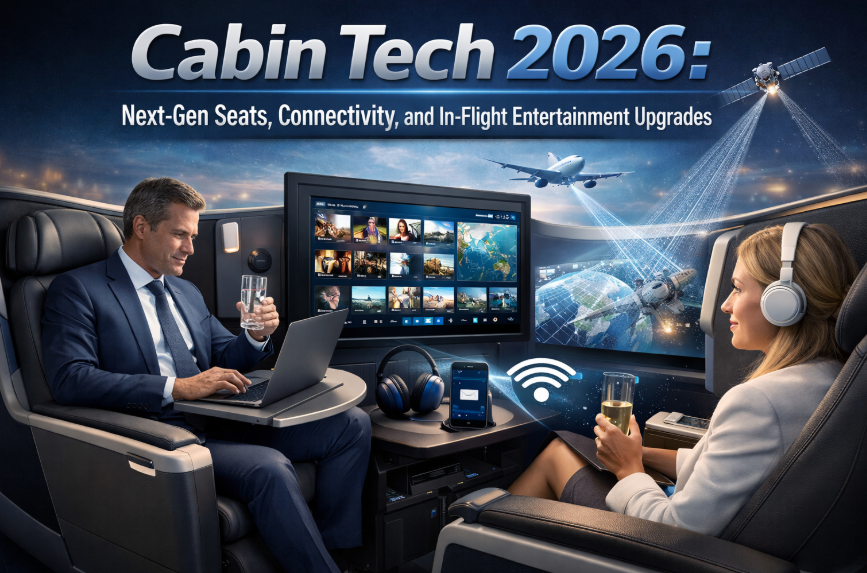
Cabin tech 2026 has moved from “feature talk” to “profit talk,” because airlines now compete on in-cabin value as much as schedules and fares. Premium cabin technology shapes how passengers judge comfort, trust Wi-Fi, and choose entertainment, which directly affects repeat bookings and upgrade behavior. Cabin modernization also attracts high-CPC advertisers, because premium travelers signal higher income, stronger purchase intent, and better lifetime value. That advertiser profile drives interest from credit cards, luxury hospitality, premium electronics, and travel insurance brands. Cabin tech 2026 therefore functions as both a passenger product strategy and a monetization strategy.
From an analytical lens, airlines win in 2026 when they treat the cabin as a product platform with measurable performance metrics. Next-gen seats reduce complaints and increase perceived quality at first touch. Reliable connectivity supports work, messaging, and streaming, which protects satisfaction during long-haul flights. Modern in-flight entertainment increases engagement, which expands partnership value and onboard commerce potential. Cybersecurity and privacy protect adoption because trust drives usage. Operational analytics then turn upgrades into scalable ROI instead of one-off showpieces. That full-stack approach is what separates “new cabin” marketing from real airline margin improvement.
Why Cabin Tech 2026 Drives Airline Revenue and Premium Demand
Cabin tech 2026 drives revenue because it strengthens pricing power in premium cabins and raises willingness to pay in premium economy. Passengers pay more when they see clear value signals, like privacy, comfort controls, and high-speed Wi-Fi. Airlines also gain leverage in corporate travel because reliability matters more than novelty for business buyers. Better cabin technology improves loyalty retention because passengers build habits around what works. Those habits reduce churn, especially on competitive routes where multiple carriers offer similar timing and fares.
Cabin upgrades also increase ancillary revenue, which matters in a margin-sensitive airline business model. Wi-Fi tiering supports predictable add-on sales when the login flow feels effortless. Better IFE supports sponsored content, premium content bundles, and destination partnerships that match travel intent. Next-gen seats support paid upgrades and loyalty redemptions because the upgrade feels “real” in photos and in use. Airlines that measure attach rate, satisfaction, and complaint reduction can model the revenue lift. That modeling improves capital allocation and de-risks fleet investments.
Next-Gen Seats 2026: Ergonomics, Privacy, and Smart Comfort
Next-gen seats 2026 focus on fatigue reduction because long-haul discomfort has a direct cost through complaints, compensation, and brand damage. Airlines improve comfort when they prioritize support geometry and posture variety instead of just thicker cushions. Better lumbar zones and head support reduce neck strain and “seat slump” during long flight segments. Simple controls also matter because passengers dislike complicated interfaces under low light. When a passenger finds a comfortable position quickly, satisfaction rises and crew interruptions fall.
Privacy upgrades in 2026 act like a premium feature because they reduce social stress and improve perceived control. Airlines use staggered layouts, seat shells, and divider logic to protect personal space without sacrificing cabin density. Storage and power placement also shapes comfort because clutter increases friction in a small environment. A passenger who can store devices, charge easily, and work in peace experiences less cognitive load. That calmer experience increases perceived luxury, which supports higher yields and better reviews.
Cabin Connectivity 2026: High-Speed Wi-Fi, Satellite Resilience, and Easy Login
Connectivity in 2026 must perform consistently because passengers now compare aircraft Wi-Fi to everyday broadband. Airlines need route-aware capacity planning because demand spikes on business-heavy corridors and long-haul flights. Strong performance requires resilience, including smart handoffs and redundancy when coverage shifts. Airlines that monitor latency, drop rates, and session success can improve service quality faster than competitors. That operational feedback loop reduces refunds and increases paid plan adoption.
Easy login drives Wi-Fi revenue because friction kills attach rate. Loyalty single sign-on reduces time-to-connect and improves repeat usage. Clear pricing tiers help passengers choose fast, because ambiguity increases abandonment. Secure sessions protect trust, which matters when passengers use payments and work tools mid-flight. When the cabin network behaves like a reliable service, passengers pay more often and complain less. That outcome improves both ancillary profit and brand credibility.
In-Flight Entertainment 2026: Personalization, Streaming UX, and Premium Hardware
IFE in 2026 must feel modern because passengers notice lag, clutter, and outdated menus instantly. Airlines improve engagement when they use smarter search, better content organization, and relevant recommendations. Language discovery matters because global cabins require strong localization. Family mode also matters because parents want predictable controls and age-appropriate defaults. When content discovery feels easy, passengers spend more time engaged instead of frustrated.
Hardware upgrades increase perceived quality because screens and audio represent the “face” of the cabin product. Sharp displays, responsive touch, and stable playback create a premium impression even before the first meal service. Bluetooth audio support matches modern traveler behavior because many passengers carry premium headphones. Low-latency UI reduces annoyance because every tap should feel immediate. Better accessibility features expand usability and reduce negative experiences. A strong IFE platform also supports partnerships, commerce, and advertising because engagement creates inventory.
Cybersecurity and Privacy 2026: Trust, Compliance, and Passenger Control
Cabin cybersecurity matters in 2026 because connected systems expand risk, and airlines cannot afford reputational shocks. Airlines reduce risk when they segment networks and isolate passenger devices from critical systems. Zero-trust principles help because they assume compromise and limit blast radius. Secure update mechanisms also matter because IFE and cabin devices need patching without introducing instability. Airlines that build security into design avoid expensive remediation later.
Privacy governance matters because personalization needs consent, not guesswork. Passengers adopt services when they understand what data the airline collects and why it matters. Clear opt-in design improves trust and reduces backlash. Short retention windows reduce risk exposure while still supporting personalization benefits. Auditability supports compliance and vendor accountability. When airlines treat privacy as part of premium service, they increase adoption of Wi-Fi, IFE profiles, and loyalty integrations.
Operational ROI 2026: Maintenance Analytics, Standardization, and Retrofit Economics
Operational ROI depends on reliability because a failed seat actuator or frozen screen erases premium value. Airlines improve uptime when they use telemetry for predictive maintenance. Sensors and diagnostics reveal failure patterns before they trigger passenger complaints. That insight helps maintenance teams replace parts proactively during planned downtime. Fewer in-service failures reduce delays and protect dispatch reliability. Those benefits translate into real cost savings and stronger customer satisfaction.
Retrofit versus new-delivery decisions require a structured framework because capital and downtime drive opportunity cost. Retrofit programs work best when airlines use modular kits and standardized components. Modularity speeds installation and reduces training complexity. Fleet consistency improves operations because crews and technicians handle fewer variations. Airlines should also align upgrades with route strategy, because premium demand differs by market. A disciplined rollout plan improves ROI and avoids uneven product perception across the network.
Conclusion
Cabin Tech 2026 delivers measurable airline value when airlines treat seats, connectivity, and entertainment as one integrated product system. Next-gen seats raise comfort and privacy, which supports premium pricing and stronger loyalty. High-speed Wi-Fi increases satisfaction and expands ancillary revenue through tiered plans and higher attach rates. Modern IFE increases engagement, strengthens partnerships, and improves brand perception through streaming-grade UX. Cybersecurity and privacy protect trust, which sustains adoption. Operational analytics then convert upgrades into scalable ROI across the fleet. That combination turns cabin technology into a durable competitive advantage in 2026.
FAQs
1) What makes Cabin Tech 2026 different from earlier cabin upgrades?
Cabin Tech 2026 focuses on platform thinking, where seats, Wi-Fi, and IFE work together with measurable performance metrics.
2) Which cabin investment usually shows the fastest ROI in 2026?
High-quality connectivity often shows fast ROI because paid Wi-Fi adoption rises when onboarding is easy and performance stays consistent.
3) Do next-gen seats matter if an airline already offers lie-flat beds?
Yes, because ergonomics, privacy, storage, and control simplicity still shape comfort, perceived luxury, and repeat purchase behavior.
4) How do airlines monetize in-flight entertainment beyond movies?
Airlines monetize IFE through premium bundles, sponsored placements, destination partnerships, shopping integrations, and loyalty-linked offers.
5) Why do cybersecurity and privacy affect cabin revenue?
Trust drives usage, and passengers avoid paid Wi-Fi and personalization when they worry about security, data collection, or unclear consent.
Read More