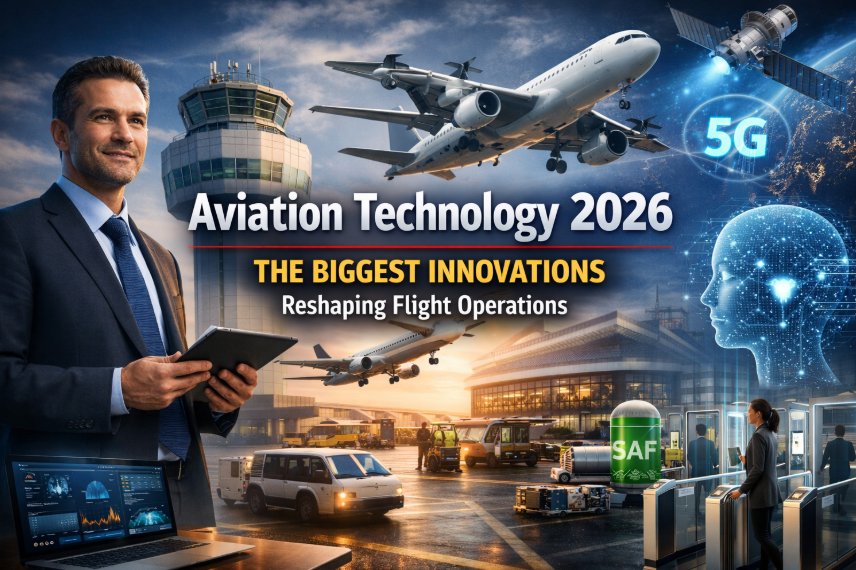
Aviation technology 2026 is changing flight operations faster than many airline executives expected, because aviation innovation now targets operational efficiency, safety compliance, and revenue resilience at the same time. Flight operations in 2026 are no longer just about flying from A to B, because modern airline operations depend on real-time data, predictive analytics, and smart automation across dispatch, maintenance, and ground handling. Aviation technology trends in 2026 also matter to airports, because airport operations are now a key driver of on-time performance, passenger satisfaction, and airline cost control. If you want the simplest way to think about aviation modernization, imagine flight operations like a giant orchestra where AI, connectivity, digital twins, and cybersecurity are the new conductors.
Why Aviation Technology 2026 Matters for Airlines and Airports
Aviation technology 2026 matters because airline operations face higher fuel volatility, stricter aviation safety regulations, and tougher passenger expectations for punctuality and comfort. Flight operations optimization is critical in 2026 because airlines need to reduce delays, improve turnaround time, and protect profit margins while maintaining strict regulatory compliance. Airport technology modernization is equally vital because airport congestion, gate constraints, and baggage flow problems directly affect airline operational performance and airline customer experience. When aviation operations fail, the cost impact multiplies fast, because one late inbound aircraft can trigger missed connections, crew duty issues, and costly aircraft swaps.
Aviation innovation in 2026 also matters because regulators, financiers, and corporate travel buyers increasingly track sustainability metrics, operational reliability metrics, and aviation risk management controls. Flight operations are becoming more transparent because data-driven aviation KPIs like on-time performance, fuel burn per seat, and maintenance reliability are measurable in near real time. Airport stakeholders also care because passenger throughput, security wait times, and baggage delivery time now influence commercial revenue, airline partnerships, and reputational trust. In practical terms, aviation technology 2026 is the difference between a “fragile schedule” and an “anti-fragile operation” that absorbs disruption like a shock absorber.
AI-Driven Flight Operations and Predictive Decision-Making
AI in flight operations is reshaping aviation decision-making in 2026 because airlines can now predict delays, optimize routing, and automate irregular operations with machine learning models trained on massive operational datasets. Airline AI dispatch tools help planners choose fuel-optimal flight paths, anticipate weather disruption, and balance network recovery strategies during IROPS scenarios. Predictive analytics for airline operations also improves crew scheduling by forecasting duty-time conflicts, optimizing reserve allocation, and reducing last-minute cancellations. If flight operations were once a reactive firefight, aviation AI in 2026 makes operations feel more like chess, where you think several moves ahead.
Predictive maintenance technology is another aviation innovation in 2026 because aircraft health monitoring systems can detect early signs of component degradation and recommend maintenance actions before a failure triggers an AOG event. Maintenance analytics helps airlines cut unscheduled downtime, reduce parts waste, and improve aircraft availability, which directly supports better utilization and higher revenue per aircraft. AI-driven turnaround management also matters because airlines can predict gate conflicts, baggage loading timing, and fueling delays, which reduces knock-on effects across the network. In a competitive airline market, AI-powered flight operations deliver an edge that feels like having a smarter operations center that never sleeps.
Next-Gen Connectivity: 5G, Satellite Internet, and Connected Cockpits
Aviation connectivity in 2026 is advancing because satellite internet and next-gen air-to-ground networks enable real-time operational data sharing between aircraft, airline operations control centers, and airport systems. Connected cockpit technology supports better situational awareness by delivering real-time weather updates, turbulence intelligence, and dynamic routing guidance that improves fuel efficiency and passenger comfort. High-reliability connectivity also strengthens airline operational control because dispatchers can monitor in-flight performance trends, manage diversions faster, and coordinate ground resources more precisely. In simple terms, aviation connectivity turns each aircraft into a “flying node” inside a larger digital airline network.
Airport connectivity also matters in aviation technology 2026 because surface movement coordination depends on accurate data from gates, stands, tugs, and baggage systems. A-CDM systems and digital tower technology benefit from improved data sharing because collaborative decision-making reduces taxi delays, improves runway utilization, and increases airport capacity without building new infrastructure. Stronger airport connectivity supports smarter passenger flow because airlines, airports, and security teams can synchronize boarding, gate changes, and crowd management. With connected operations, aviation becomes less like guessing the next bottleneck and more like seeing the whole system in high definition.
Sustainable Aviation Fuel and New Propulsion Pathways
Sustainable aviation fuel in 2026 is a major aviation innovation because SAF adoption directly influences airline decarbonization strategies, ESG reporting, and corporate travel procurement decisions. SAF supply chain transparency is essential because airlines need credible lifecycle emissions accounting, traceability documentation, and audit-ready sustainability data. Book-and-claim systems are gaining attention because they can accelerate SAF market participation even when physical SAF delivery is limited at specific airports. For airline operations, SAF readiness becomes an operational planning challenge because procurement, fueling infrastructure, and sustainability compliance must align without disrupting flight schedules.
New propulsion technology is also part of aviation technology 2026 because hybrid-electric aircraft development, hydrogen aviation research, and advanced turbine efficiency improvements are shaping long-term fleet strategy. Airlines and airports must prepare for future propulsion systems because infrastructure planning, safety procedures, and certification pathways take years to mature. Operationally, this means airlines need scenario planning for route suitability, maintenance training, and energy supply logistics, especially for regional aviation segments. Think of propulsion innovation like changing the “engine” of the entire industry—exciting, but it requires careful transition planning to avoid operational turbulence.
Advanced Air Mobility and Drone Integration into Airspace
Advanced air mobility in 2026 is evolving because eVTOL programs are pushing closer to commercial operations, and aviation stakeholders are designing vertiport operations, route corridors, and passenger processing systems. AAM operations require digital scheduling, airspace integration, and noise management because urban operations demand high safety standards and strong community acceptance. Vertiport technology planning matters because charging infrastructure, turnaround workflows, and emergency response procedures must fit into dense city environments. From a flight operations viewpoint, eVTOL networks resemble airline operations in miniature, where dispatch precision and maintenance reliability make or break the business.
Drone integration is also expanding in aviation technology 2026 because drones are increasingly used for airport perimeter security, runway inspections, and logistics support. UTM systems and detect-and-avoid technology are critical because drones must operate safely alongside manned aviation and within controlled airspace boundaries. Airports benefit operationally because drone-based inspections can reduce runway closure time, improve safety checks, and deliver faster incident response. When done right, drones act like “eyes in the sky” that improve airport operational awareness without adding major labor cost.
Digital Twin Airports and Smart Turnaround Automation
Digital twin technology in aviation 2026 is transforming airport operations because airports can simulate gate assignments, baggage flow, and passenger movement to identify bottlenecks before they cause delays. A digital twin airport model helps predict disruption impacts during weather events, equipment failures, or sudden schedule changes, which supports faster recovery planning. Airline turnaround optimization improves when airports share real-time data because ground handling teams can anticipate resource needs, reduce idle time, and minimize aircraft turnaround variance. A digital twin is basically a “mirror airport” where you can test decisions without breaking the real one.
Ramp automation is also reshaping flight operations because autonomous tugs, smart loaders, and robotics-assisted baggage handling can reduce human error and improve consistency. Automation improves safety on the ramp because collision risk, equipment misuse, and fatigue-related mistakes can be reduced through smarter systems and better telemetry. For airlines, automated turnaround workflows deliver cost savings because faster turns increase aircraft utilization and reduce schedule padding. When airport turnaround becomes predictable, it feels like upgrading from a shaky old stopwatch to a precision chronometer.
Next-Level Aviation Cybersecurity and Zero-Trust Safety
Aviation cybersecurity in 2026 is a top priority because airlines and airports are more connected than ever, which expands the attack surface across IT systems, operational technology, and third-party vendor networks. Zero-trust security architecture is important because it enforces identity verification, micro-segmentation, and continuous monitoring across mission-critical aviation systems. Airlines need cybersecurity resilience because disruption to flight operations systems can cause schedule chaos, reputational damage, and regulatory scrutiny. In plain language, cybersecurity is now part of safety, because digital threats can produce real operational consequences.
Aviation software security also matters because secure updates, SBOM practices, and supply chain risk management help protect avionics-adjacent systems and airport operational platforms. Compliance frameworks and incident response plans are essential because aviation organizations must prove governance, audit readiness, and strong cyber hygiene. Training and security culture matter because phishing attacks and credential misuse remain common pathways for intrusion. A strong aviation cybersecurity program is like putting reinforced doors on every digital entry point, while also teaching everyone how not to hand over the keys.
Biometrics, Seamless Passenger Flow, and Identity Tech
Biometric airport technology in 2026 is improving passenger flow because face-based identity checks can streamline check-in, bag drop, security, and boarding when implemented with strong privacy governance. Seamless travel identity systems reduce queue time, improve throughput, and support better on-time departures because boarding delays often start with passenger processing friction. Airlines benefit commercially because smoother journeys increase customer satisfaction, support premium upsell opportunities, and reduce missed connection costs. From an operations lens, biometric flow is like upgrading a busy highway from stop signs to synchronized traffic lights.
Identity management governance is crucial because aviation stakeholders must handle consent, data protection, and accuracy standards to maintain trust and regulatory compliance. Smart boarding systems also improve baggage reconciliation because passenger identity, boarding status, and bag tracking can be linked more reliably to reduce mishandled baggage incidents. Airport customer experience improves because fewer manual checks mean fewer interruptions and fewer bottlenecks at peak hours. When identity tech works well, passengers feel the journey is “effortless,” and operations teams feel the process is “measurable.”
Autonomous Taxi, Digital ATC, and Airspace Modernization
Autonomous taxi technology and surface movement systems in 2026 support better airport efficiency because they reduce taxi time, optimize runway entry sequencing, and lower fuel burn during ground operations. Runway safety technology is advancing because runway incursion prevention tools, improved surveillance, and decision-support alerts help controllers and pilots reduce situational risk. Airport capacity management improves because better surface flow reduces congestion and increases predictable throughput. In a world where minutes matter, surface optimization is one of the fastest ways to improve operational reliability.
Airspace modernization is also accelerating because digital ATC tools and trajectory-based operations aim to improve routing efficiency and reduce airborne holding. Controller decision-support systems can improve workload management during peak demand and complex weather patterns, which supports safer and more efficient traffic flow. Airlines benefit because optimized trajectories reduce fuel costs, improve schedule integrity, and lower emissions per flight. Think of airspace modernization as “upgrading the map” that everyone uses, so routes become smoother, smarter, and less wasteful.
Cabin Tech and Operational Efficiency Upgrades
Cabin technology in 2026 supports airline efficiency because lighter materials, modular interiors, and smarter components can reduce aircraft weight and simplify maintenance cycles. Fuel efficiency gains matter because weight reduction and better cabin systems reduce operating cost per seat and improve airline profit resilience. Cabin predictive maintenance also helps because connected systems can signal faults early, reducing cabin-related delays and minimizing passenger dissatisfaction. Even small cabin improvements can produce big operational benefits when multiplied across thousands of flights.
In-flight entertainment and connectivity platforms are evolving into operational tools because airlines can use cabin systems to support service optimization, onboard sales, and real-time passenger communications during disruptions. Better passenger communication reduces operational stress because clear updates reduce gate crowding, improve boarding behavior, and lower complaint volume. Cabin tech also supports brand differentiation because premium experiences can justify higher yields on competitive routes. In 2026, the cabin is not just a passenger space, because it becomes a data-driven environment that supports airline performance.
What Airlines Should Do Now: 2026 Adoption Roadmap
An aviation technology adoption roadmap in 2026 should start with a data-first operating model because AI, digital twins, and predictive maintenance only work well when data quality, integration, and governance are strong. Airlines should align aviation KPIs with technology investments because operational efficiency improvements must be measurable in fuel burn, turnaround time, aircraft availability, and on-time performance. Vendor selection matters because interoperability, cybersecurity posture, and support capability determine whether technology scales smoothly across the fleet. The best aviation strategy feels like building a strong foundation first, then adding floors, instead of stacking shiny tools on weak systems.
Pilot programs are essential because airlines need controlled trials to validate ROI, train teams, and refine workflows before full rollout across operations. Change management is crucial because dispatchers, engineers, ground crews, and cabin teams must trust the technology and understand how it supports safety and performance. Airlines should also build resilience planning because technology adoption must include redundancy, incident response, and continuous improvement cycles. If you treat aviation technology like a living system, you’ll keep improving, but if you treat it like a one-time purchase, you’ll fall behind.
Conclusion
Aviation technology 2026 is reshaping flight operations through AI decision-making, next-gen connectivity, SAF progress, airspace modernization, cybersecurity upgrades, and smarter airport automation. The airlines and airports that win in 2026 will be the ones that treat operations like a connected ecosystem, where every data point supports safer, faster, and more efficient performance. When aviation innovation is deployed with clear KPIs and strong governance, it reduces disruption, improves passenger experience, and strengthens profitability at the same time. If your goal is better flight operations, the smartest move is to modernize step by step, because in aviation, consistency is the real competitive advantage.
FAQs
1) What is the biggest aviation technology trend in 2026?
The biggest aviation technology trend in 2026 is AI-driven operational optimization, because predictive analytics and automation improve dispatch, maintenance, and disruption recovery.
2) How does AI improve airline on-time performance in 2026?
AI improves airline on-time performance in 2026 by predicting delays, optimizing crew and gate planning, and supporting faster IROPS decisions.
3) Why is aviation connectivity important for flight operations?
Aviation connectivity is important because real-time data links improve routing, surface coordination, maintenance forecasting, and operational communication.
4) How does SAF affect airline operations in 2026?
SAF affects airline operations by adding procurement planning, fueling logistics, and sustainability reporting requirements, while supporting airline decarbonization goals.
5) What should airlines prioritize when adopting aviation technology in 2026?
Airlines should prioritize data governance, cybersecurity, scalable vendor integration, and pilot programs that prove operational ROI before large-scale rollout.
Read More