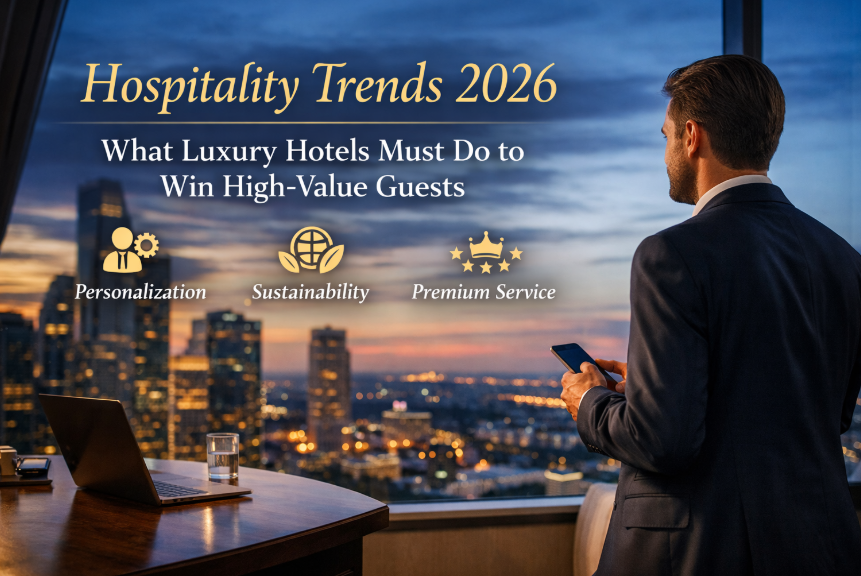
Luxury hospitality in 2026 is not just about marble lobbies and expensive thread counts, because luxury travelers in 2026 compare every luxury hotel to the best digital experience they’ve ever had. High-value guests in 2026 want premium convenience, premium privacy, premium wellness, and premium personalization, and they will pay for luxury hotels that deliver luxury service consistency. If your luxury hotel brand wants high-value guest loyalty, you need a hospitality strategy that feels effortless, exclusive, and undeniably worth the premium price.
Below is a clear, detailed, SEO-ready guide to hospitality trends 2026 that luxury hotels can implement to attract high-value guests, increase direct bookings, and unlock higher-margin premium revenue.
Why “High-Value Guest” Expectations Are Rising in 2026
High-value guests in 2026 are spending more intentionally, because luxury travel budgets now demand luxury outcomes that feel measurable and memorable. A luxury hotel stay is evaluated like a premium investment, because affluent travelers want a strong return in comfort, privacy, wellness, and experience quality. This means hospitality trends 2026 reward luxury hotels that communicate value clearly, deliver premium service reliably, and reduce friction across the entire guest journey.
Luxury hotels must also adapt because high-value travelers are more informed than ever, and luxury travel research happens across Google search, luxury travel advisors, review platforms, and social media discovery. If your hospitality marketing promises “exclusive,” the on-property experience must actually feel exclusive, because high-value guests can instantly detect generic luxury. In 2026 hospitality strategy, the winners are luxury hotels that deliver distinctive positioning, premium personalization, and premium service recovery, because affluent guests expect perfection—but they respect brands that fix issues fast.
Hyper-Personalization That Feels Human, Not Creepy
Hyper-personalization in luxury hospitality 2026 must feel like thoughtful service, not surveillance, because premium guests value privacy as much as personalization. The best luxury hotels use preference intelligence to anticipate needs—like pillow choice, fragrance sensitivity, minibar style, and check-in pace—without making the guest feel tracked. When personalization is executed correctly, it increases guest satisfaction, increases premium upsells, and increases luxury loyalty, because high-value guests feel recognized in a respectful way.
To win high-value guests in 2026, luxury hotels should design personalization across “micro-moments,” because micro-moments are where premium perception is created. A personalized welcome note is nice, but a personalized room environment, personalized dining recommendations, and personalized wellness scheduling are more valuable. The hospitality trend is clear: luxury hotels that use ethical data practices, secure systems, and staff training to deliver human-centered personalization will outperform hotels that rely on generic “VIP” gestures.
Experience-Led Luxury: Sell Stories, Not Rooms
Experience-led luxury is a top hospitality trend for 2026 because high-value guests buy emotional outcomes, not just accommodations. A luxury room is expected, but a luxury story is what drives five-star reviews, social proof, and premium referrals. When luxury hotels design experience packages—like private art access, chef-led culinary tours, or culturally respectful local immersion—they create premium differentiation that competitors cannot easily copy.
Luxury hotels must treat experience design as a product strategy, because experiences can deliver higher margins than room revenue alone. The goal is to create “signature moments” that guests remember and share, because memory is the most valuable asset in luxury hospitality marketing. If you want to win high-value guests in 2026, build partnerships with local experts, premium brands, and trusted guides, then package those offerings with clear premium positioning, concierge storytelling, and seamless logistics.
AI Concierge + Human Butler: The Winning Service Stack
AI concierge services in luxury hotels are rising in 2026 because high-value guests expect instant answers and instant problem-solving. Guests want quick check-in updates, reservation confirmations, and local recommendations, and they want those services available 24/7. AI concierge tools can reduce wait time, increase guest satisfaction, and improve service efficiency, which matters because premium travelers hate friction more than they hate price.
However, the luxury hospitality trend is not “replace humans,” because luxury is still emotional and relational. The winning model is AI concierge + human butler, because AI handles speed and accuracy while human staff deliver warmth, discretion, and intuitive care. Luxury hotels should train teams to use AI as a support system, not a script, because high-value guests reward authenticity and punish robotic service. When service feels both fast and deeply human, luxury hotels win repeat bookings and premium loyalty.
Wellness as a Revenue Engine, Not a Spa Add-On
Wellness hospitality in 2026 is a major luxury trend because affluent travelers prioritize energy, longevity, and stress reduction. A luxury spa is no longer enough, because premium guests want sleep optimization, recovery programs, fitness personalization, and mental wellness support. The most competitive luxury hotels create wellness journeys that start before arrival and continue after departure, because continuity increases guest trust and increases premium package value.
Luxury hotels should treat wellness as a revenue engine because wellness programs can attract high-CPC advertisers and premium brand partnerships. Sleep suites, guided breathwork, nutrition-forward menus, and high-end fitness collaborations are not just amenities—they are monetizable products. If your luxury hotel targets high-value guests, build wellness offers with clear outcomes, premium pricing strategy, and credible expertise, because affluent travelers pay more for wellness solutions that feel safe, evidence-informed, and luxurious.
Sustainability That Premium Guests Can Verify
Sustainable luxury is a defining hospitality trend 2026 because affluent travelers want luxury without guilt, and they also want proof, not slogans. Guests will ask where products come from, how waste is managed, and whether local communities benefit, because luxury travel is now tied to personal values and social identity. Sustainability in luxury hotels must be measurable and transparent, because greenwashing damages trust and reduces premium brand equity.
Luxury hotels that win high-value guests use sustainability as storytelling, because verified sustainability builds emotional loyalty and premium differentiation. Transparent sourcing, plastic reduction, renewable energy adoption, and responsible water use can be communicated in a way that feels elegant, not preachy. In 2026 hospitality marketing, the best approach is “quiet proof,” where sustainability is built into operations and shared through simple, credible signals that guests can see and verify.
Privacy, Security, and Trust as Luxury Features
Privacy in luxury hospitality 2026 is not optional, because high-value guests often have high visibility, high risk, or high sensitivity. Discreet check-in, private entrances, controlled access floors, and staff confidentiality standards matter more than flashy design, because privacy is a real luxury benefit. Luxury hotels must also protect guest data, because cybersecurity failures can destroy trust and trigger reputational damage that spreads fast online.
Security in luxury hotels must include payment security and identity protection, because affluent travelers use premium cards, corporate accounts, and high-value transactions. When luxury hotels communicate security in a subtle but confident way, they reduce friction and increase booking confidence. In 2026, trust is a competitive advantage, so luxury hotels should treat privacy design, staff training, and cybersecurity investment as part of the brand promise.
Culinary Luxury 2026: From Fine Dining to Food Identity
Luxury dining in 2026 is shifting from formal fine dining to identity-driven culinary experiences, because high-value guests want food that tells a story. A luxury hotel restaurant must feel like a destination, because affluent travelers will choose hotels based on dining reputation and culinary uniqueness. This is why hospitality trends 2026 emphasize chef-led concepts, local ingredient storytelling, and premium beverage programs that create memorable moments.
Culinary strategy is also a revenue strategy, because dining experiences can increase total spend per guest and boost luxury hotel margins. Private tastings, chef’s tables, wine pairings, and cultural culinary workshops provide premium upsell opportunities that feel exclusive. If you want to win high-value guests, your culinary offering must match your brand positioning, because a generic menu weakens luxury credibility while a signature concept strengthens luxury identity.
Smart Rooms and Frictionless Tech That Actually Works
Smart room technology is a luxury expectation in 2026, but it only helps when it works flawlessly, because broken tech creates instant frustration. High-value guests want strong Wi-Fi, intuitive lighting controls, excellent soundproofing, and simple in-room automation that reduces effort. The best luxury hotels use technology to remove friction, because friction is the enemy of premium perception.
Frictionless hotel tech also supports direct booking and loyalty, because digital convenience improves satisfaction and increases rebooking intent. Contactless check-in, digital keys, messaging-based service requests, and fast issue resolution tools all improve guest experience metrics. The key is to keep tech invisible and reliable, because luxury hotels win by making everything feel effortless, not complicated.
Luxury Loyalty Programs Must Become Lifestyle Memberships
Luxury loyalty programs in 2026 must go beyond points because affluent guests care about access, not discounts. High-value travelers want priority experiences, guaranteed upgrades, exclusive events, and partner benefits that feel like a premium lifestyle membership. This hospitality trend is growing because luxury guests want recognition that feels meaningful, not transactional.
Luxury hotels should build loyalty ecosystems with premium partners, because partner perks increase perceived value and increase retention. Think private shopping benefits, airline status matches, wellness memberships, and high-end brand collaborations that support the luxury identity. If your hotel wants more direct bookings, loyalty must feel like a club, because clubs create belonging, and belonging creates repeat revenue.
Revenue Management 2026: Pricing for Value, Not Just Occupancy
Revenue management for luxury hotels in 2026 must prioritize value-based pricing, because high-value guests will pay premium rates when the experience quality is clear. The goal is not just occupancy, because luxury profitability comes from high ADR, high ancillary spend, and high guest lifetime value. Luxury hotels should measure total revenue per guest, because the most valuable guest may spend more on dining, wellness, and experiences than on the room itself.
Dynamic packaging is another 2026 hospitality trend because packages make premium pricing feel justified and easy to understand. Instead of discounting, bundle value: airport transfers, private experiences, wellness sessions, and dining credits can increase conversion while protecting luxury positioning. When pricing aligns with clear premium outcomes, luxury hotels attract high-value guests who care about quality more than deals.
Social Proof and Influencer Strategy for High-Net-Worth Audiences
Social proof in luxury hospitality 2026 is a decision trigger because affluent travelers still read reviews, watch videos, and scan credibility signals. A luxury hotel brand must manage review quality, review velocity, and reputation consistency, because one weak link can reduce conversion. High-value guests look for signals of exclusivity, privacy, and service excellence, and social proof delivers those signals at scale.
Influencer marketing also evolves in 2026 because luxury hotels must prioritize brand safety and audience fit. Micro-influencers with high trust in luxury travel circles can outperform generic celebrity campaigns, because authenticity influences premium decision-making. The best strategy is to curate creators who match your brand tone, then design content moments that highlight unique luxury experiences, because unique moments generate high-quality shares and high-intent traffic.
Luxury Service Culture: Hiring, Training, and Empowerment
Service culture is the core of luxury hospitality in 2026 because technology cannot replace empathy, judgment, and discretion. High-value guests remember how you made them feel, and they measure luxury through consistency, speed, and emotional intelligence. This means luxury hotels must hire for attitude, train for standards, and empower staff to solve problems fast, because service recovery is a brand-defining moment.
Employee experience is also a luxury strategy, because motivated staff deliver better service and reduce costly turnover. Clear SOPs, scenario-based training, and empowerment budgets help staff create premium guest outcomes without management delays. If you want to win high-value guests, invest in people like you invest in design, because luxury is delivered by humans in real time.
Brand Positioning for Luxury Hotels in 2026
Luxury hotel branding in 2026 must be specific, because vague “five-star luxury” messaging blends into the market. High-value guests choose brands with a clear identity: wellness luxury, art luxury, privacy luxury, culinary luxury, or family luxury with premium service. When your positioning is sharp, your marketing becomes more efficient, your pricing becomes stronger, and your guest expectations become easier to exceed.
SEO strategy also matters because luxury travel discovery starts online, and high-CPC advertisers target premium travel keywords. Luxury hotels should publish content that matches high-intent search terms like “luxury hotel experiences,” “private villa hotel,” “wellness retreat,” and “best luxury honeymoon hotel,” because these keywords attract valuable audiences. In 2026 hospitality marketing, the best brands combine premium storytelling with search-optimized structure, because that combination drives both traffic and high-quality bookings.
KPIs That Matter: What to Measure to Win High-Value Guests
Luxury hotels in 2026 must measure what actually predicts premium growth, because vanity metrics do not protect profitability. Track direct booking share, repeat booking rate, and ancillary revenue per guest, because these indicators reveal true luxury performance. Also track NPS and review quality by segment, because high-value guests often have different expectations than leisure groups.
You should also monitor conversion points across the guest journey, because friction can hide inside small details. Measure response times, check-in satisfaction, Wi-Fi complaints, and service recovery speed, because these operational metrics shape reputation and revenue. When luxury hotels use KPIs as a feedback loop, they improve faster, and improvement speed becomes a competitive advantage in hospitality 2026.
Implementation Roadmap: 90 Days to Upgrade Luxury Hospitality
In the first 30 days, focus on quick wins that reduce friction, because friction removal improves guest satisfaction immediately. Upgrade Wi-Fi reliability, refine check-in workflows, improve in-room essentials, and standardize service recovery scripts that still feel human. Also launch a preference capture system that respects privacy, because ethical personalization increases luxury perception without risking trust.
In days 31–90, pilot high-margin programs like wellness packages, signature experiences, and loyalty membership perks, because pilots validate demand without heavy risk. Train staff on AI concierge workflows, build premium local partnerships, and refresh SEO content that targets high-value travel keywords. The goal of this 90-day plan is simple: deliver premium outcomes consistently, communicate luxury value clearly, and make every guest interaction feel like a personalized advantage.
Conclusion
Hospitality trends 2026 make one thing very clear: luxury hotels win high-value guests by combining premium personalization, premium privacy, premium wellness, and premium experience design into one seamless brand story. When your luxury hotel reduces friction, improves trust, and creates unforgettable moments, you can charge premium prices with confidence and still increase guest satisfaction. If you treat luxury like a system—service culture, technology, sustainability, and storytelling working together—you don’t just attract high-value guests, you keep them.
FAQs
1) What is the biggest hospitality trend in 2026 for luxury hotels?
The biggest hospitality trend 2026 is experience-led luxury with frictionless service, because high-value guests prioritize memorable outcomes and effortless comfort.
2) How can luxury hotels increase direct bookings in 2026?
Luxury hotels increase direct bookings by strengthening luxury loyalty membership benefits, improving website conversion, and publishing SEO content targeting premium travel keywords.
3) Do high-value guests care about sustainability in luxury hotels?
Yes, high-value guests care about verified sustainability, because premium travelers want luxury without guilt and prefer measurable ESG practices over marketing claims.
4) How should luxury hotels use AI without losing human warmth?
Luxury hotels should use AI for speed and accuracy while training staff to deliver empathy and discretion, because the best service stack combines AI concierge and human care.
5) What wellness services attract high-value luxury travelers in 2026?
High-value luxury travelers seek sleep optimization, longevity programs, stress reduction, fitness personalization, and nutrition-forward dining, because wellness is now a premium lifestyle priority.
Read More